


From fragmented health data to predictive systems, the UAE is positioning itself at the forefront of a new biological intelligence economy
If the last two decades were defined by digital infrastructure, cloud computing, and data centres, the next may be defined by something less visible but far more consequential: biological intelligence.
At its core is a simple reality. Human biology is the largest unstructured dataset on Earth. Every person continuously generates biological signals through their genes, immune system, metabolism, and environment. Yet modern healthcare captures only fragments of this data, often too late, and rarely in a way that can be acted upon in real time.
This is where a structural shift is beginning. Healthcare systems today remain largely reactive. Patients are diagnosed after symptoms appear, treatments are based on population averages, and data sits in disconnected silos. Even where advanced tools such as genomics exist, they are often static and underutilised. The UAE, for example, has already built significant genomic datasets, yet much of this information remains unstructured and inactive in day-to-day clinical decision-making.
The next phase of healthcare, often described as Medicine 3.0, is moving toward something fundamentally different: a system that is predictive, continuously learning, and personalised at the level of the individual.
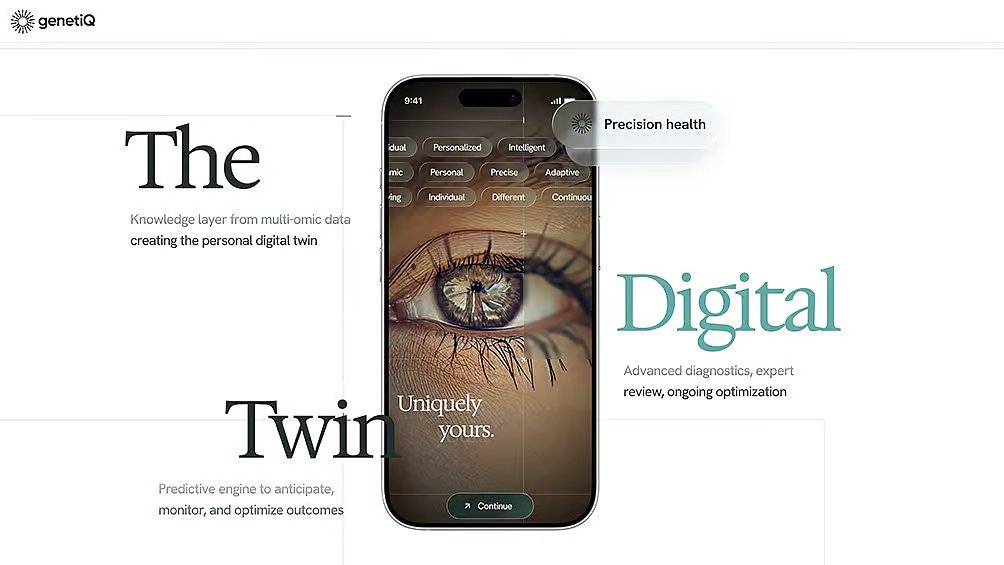
At the centre of this transition is infrastructure. Abu Dhabi-based Prepaire Labs is building what it describes as a biological intelligence platform designed to move healthcare from episodic care to continuous modelling of human health. Rather than focusing on a single diagnostic or therapy, the system integrates genomics, metabolomics, immune profiling, imaging, and wearable data into a unified, continuously updating model known as a digital twin.
This model evolves as new data is generated, allowing clinicians to detect early signs of disease, simulate interventions, and guide treatment decisions with greater precision.
The ambition is not incremental. The first phase of deployment in the UAE is structured around a 50,000-participant national cohort, split between Emirati citizens and residents, creating one of the most representative biological datasets assembled at a national level.
This scale is strategic. Most global medical datasets are heavily biased toward Western populations. By building a sovereign dataset aligned to its own population, the UAE strengthens its ability to deliver more accurate care while positioning itself as a reference model for other countries.
What differentiates this approach is not just data collection, but validation. One of the most persistent challenges in modern healthcare is the gap between prediction and proof. Artificial intelligence models can generate insights, but without testing those insights in real biological systems, their reliability is limited. Prepaire’s model introduces a validation layer where predictions are tested using patient-derived cells and organoid systems before informing clinical decisions.
This closes a loop that has traditionally been fragmented across diagnostics, research, and treatment. The implications extend beyond healthcare delivery.
A system that detects disease earlier reduces long-term costs. A continuously improving dataset becomes a strategic asset for research and pharmaceutical development. And a sovereign biological intelligence layer reduces reliance on external systems, strengthening national resilience.
The economic model reflects this dual role. The UAE deployment aims to combine public and private sector participation.
Over time, the opportunity extends further. Once established, this type of infrastructure can be deployed or licensed internationally, in much the same way cloud computing platforms expanded globally. The countries that move early do more than adopt new technologies, they define the systems others follow.
For the UAE, this fits a familiar pattern. The country has consistently invested ahead of global shifts, from logistics and aviation to energy and artificial intelligence. Biological intelligence may represent the next layer in that progression.
There are still challenges. Regulatory frameworks will need to evolve to support continuously learning systems. Data governance must balance innovation with privacy and trust. Clinical adoption requires a shift in how medicine is practiced.
But the direction is clear. Healthcare is moving from reaction to prediction. From static records to dynamic models. From fragmented data to integrated intelligence.
The question is no longer whether this transition will happen, but where it will be built first. The UAE is positioning itself to lead.
For more information, visit: www.prepaire.com
Source: Khaleej Times