


Wissam Serdoun’s perfume business was born out of a need to cope with her mother’s breast cancer diagnosis. The French-Algerian business owner needed an outlet to cope with the fact, so she began creating perfumes without intending to sell them.
“I was alone here in Dubai,” she said. “So I decided to create something as a therapy,” adding that for her, it was a way to escape reality, especially since she was away from her family.
After experimenting with friends and family, she further developed her business. “We wanted some products that are strong enough for people who do chemotherapy,” she explained. “We wanted something meaningful with good quality for the nose, for the skin, for everything. And we also linked the aromatherapy through the perfume.
Stay up to date with the latest news. Follow KT on WhatsApp Channels.
Chemotherapy alters taste and smell, often in negative ways, according to the American Cancer Society, which could interfere with treatment. Serdoun said that it wasn’t just about how nice the scent is that she had in mind when producing her products, but the intention behind it.
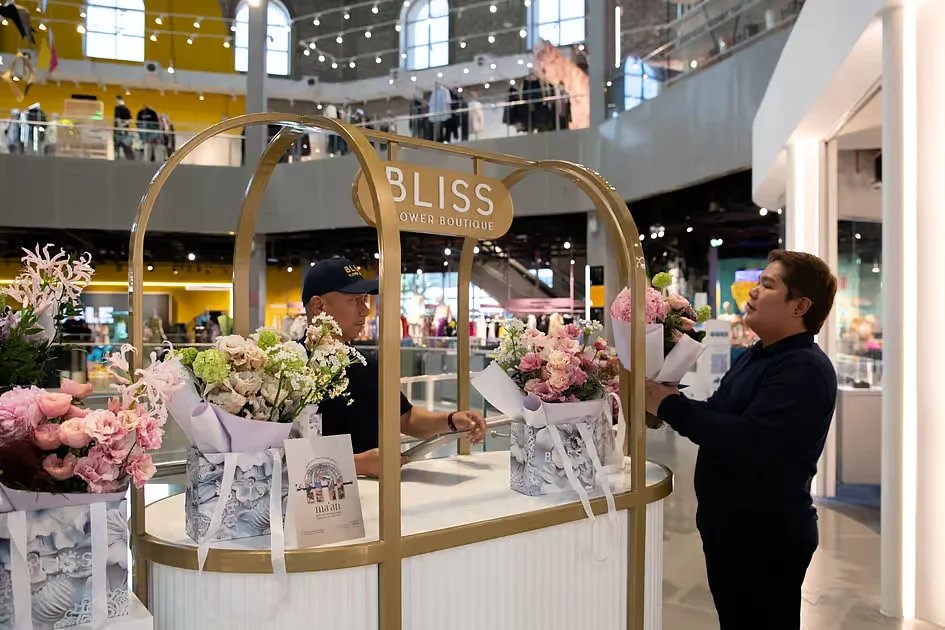
Her mother battled cancer, her business grew, and now Serdoun’s brand was chosen by Majid Al Futtaim to be displayed at no cost at the Mall of the Emirates. The initiative, she said, has made her very grateful for the opportunity to showcase her brand at a reputable mall.
“We meet a lot of people from all over the world here. And we also got to know more about our brand, how it’s perceived in real life,” she said. “Just to be here for us is a blessing.”
Her brand, along with multiple other homegrown businesses, was selected for Majid Al Futtaim’s Ma’an programme, introduced during the height of the regional conflict to ease the burden on SMEs.
Lessons from the pandemic
Other UAE-based businesses in the programme have been running for years and have endured the hardships of the Covid-19 pandemic. Baynu Kanchan’s business, a brown-only confectionery, faced major hurdles in 2020 and again earlier this year due to the regional conflict.
She started Bruijn, which means “brown” in Dutch, around 16 years ago with her mother and sister.
“I was never worried, honestly,” Kanchan said when asked about how she felt during the start of the war. “When the entire situation started, we always knew that we would get through it.”
Her business depends on ingredients like nuts, dried fruits, and chocolates, all of which are imported from other countries. However, when shipping lines in the region were severely disrupted, she was still not worried about food stocks and ingredients coming into the country.
“From Covid, we learned something: we should always have six months’ worth of ingredients with us. So, we never faced any issues of not having the product,” she noted.
Pushing through uncertainty
Jordanian-Palestinian fashion designer Zaid Farouki moved to Dubai more than a decade ago to start his clothing business. The Dubai Design District was just emerging as the city’s next creative district, and Farouki wanted to be one of the designers to set up shop.
But during the pandemic, his business still made big milestones. One of the suits he designed was worn by American musician Pharrell Williams on a Vogue cover. His pieces have also appeared during the Met Gala, the Grammy Awards, and the Cannes Film Festival.
The main thing he took from the Pandemic was “that things do eventually get better,” adding, “I think during Covid, we were all stuck in a bit of a spiral of like, when is this (ending)? But I think it’s riding the wave and knowing how things would eventually work out.”
After his business was selected for the Ma’an programme, Farouki said it made him feel proud to see where his brand is and to see people’s reactions to his clothing pieces.
Source: Khaleej Times