


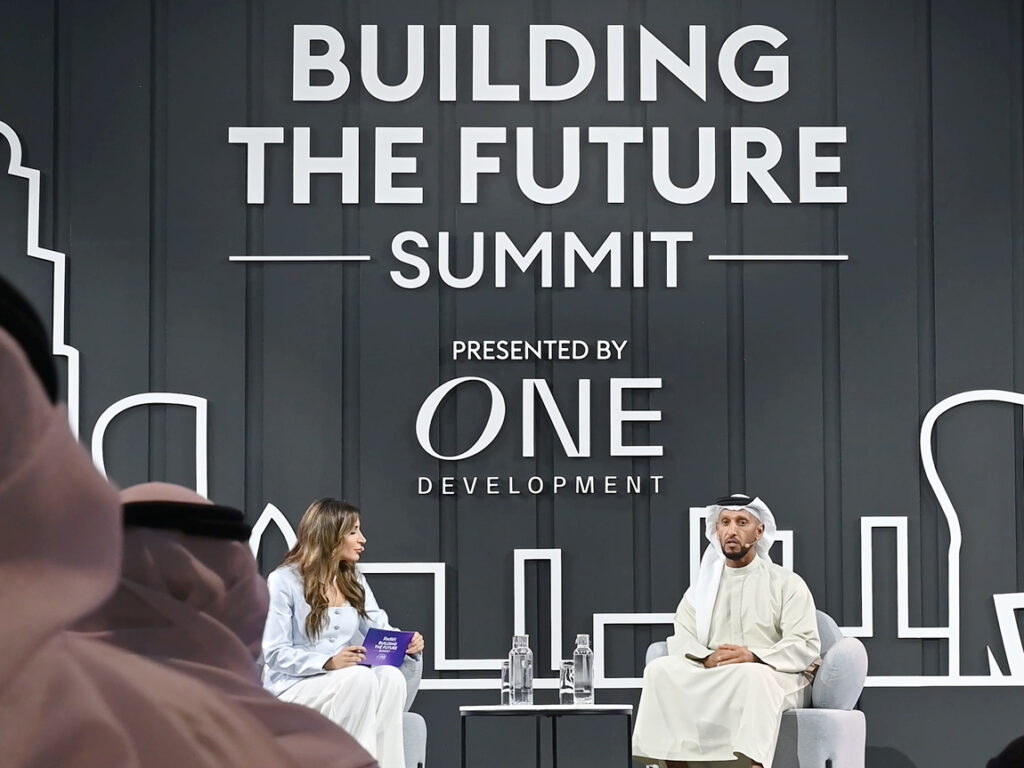
ABU DHABI, 23rd June, 2026 (WAM) — Abdulla bin Mohammed bin Butti Al Hamed, Chairman of the National Media Authority (NMA), said a cohesive national narrative turns economic achievements into a message that is clearly understood around the world.
He stressed that such a narrative has become a key compass for global investment flows, directing major capital toward the most trusted and stable environments through a comprehensive story that reflects the country’s vision and its ability to shape the future.
Speaking at a panel discussion titled ”Building the Future Narrative: How Media Shapes Nations, Cities, and Economies” during the Forbes Middle East’s Building The Future Summit, Al Hamed noted that UAE media no longer focuses solely on reporting figures and results, but has evolved into a platform that presents a complete narrative of vision, stability and opportunity, reinforcing global confidence in the national economy and turning achievements into value and influence.
He explained that investment decisions do not begin with numbers, but with the impressions formed in the minds of investors before they examine any data table. He said that today’s investors read newspapers, follow reports, and listen to economic podcasts, all of which shape the intellectual and psychological lens through which they later interpret economic indicators. Investors, he added, are constantly seeking an environment that can support their investments and a national story they want to be part of.
Al Hamed said media today has evolved beyond simply reflecting events, becoming a vital part of national infrastructure. He noted that, just as countries build ports and airports to support the movement of goods and people, they also develop media strategies to manage the flow of meaning, credibility, and trust.
He added that a country’s image is not a temporary media product, but the cumulative result of what a nation says about itself and what the world witnesses through its achievements.
He stressed that the UAE’s wise leadership recognised early on that media is not separate from the development process, but a genuine partner in achieving its objectives.
Every development project, he said, needs a narrative that explains its value; every achievement needs context that clarifies its impact; and every future vision needs a discourse capable of influencing and reaching global audiences.
Al Hamed emphasised that the strength of nations today extends beyond traditional measures of economic and military capability. It increasingly depends on their strategic ability to build trust and tell their story to the world through a compelling, coherent national narrative that turns achievement into credibility, credibility into influence, and influence into a lasting international presence.
He pointed out that countries are no longer competing solely on infrastructure or economic incentives, but also on their ability to build a positive image that makes them preferred destinations for living, working and investing. International reputation, he said, has become one of the key economic assets that enhance a country’s ability to attract capital, talent and businesses.
The NMA Chairman added that the UAE offers a clear model of how media can be integrated into a broader development project. The UAE narrative, he said, is grounded in tangible projects, achievements and transformations. National media does not create an alternative image to reality, but rather communicates a successful reality in a global language capable of reaching and influencing audiences worldwide.
Addressing the resilience of national narratives during times of crisis, Al Hamed said that the strength of the UAE narrative stems from the clarity of its vision and the continuity of its development journey. The UAE, he noted, is a country with a genuine long-term strategy that does not change its story with changing circumstances, but maintains its principles while continuously developing its tools. He added that the national narrative is built on enduring pillars, including stability, development, tolerance, openness, and investment in people and the future.
He explained that the difference between a media strategy and public relations lies in the fact that public relations seeks to defend an image, while strategy builds a reality that ensures the sustainability of that image. The strength of the UAE narrative, he added, comes from the alignment between message and practice, as what the country tells the world is a direct extension of what is being achieved on the ground.
Speaking about national media identity, Al Hamed stressed that a successful national brand is not built through advertising campaigns or publicity, but through achievements that are transformed into stories understood by the world. The UAE’s success in building its national media identity, he said, is the result of a convergence between a clear future vision, institutional performance capable of delivering results, and the ability to engage with the world through a modern and open language.
He further noted that the strength of national identity lies in its ability to balance authenticity and ambition, preserving roots and values while remaining open to the world and its changes. The UAE, he said, has succeeded in transforming its geographic location into an opportunity, challenges into projects, and vision into integrated systems of action, strengthening its global presence and reinforcing a narrative centred on innovation, tolerance, investment in people and future foresight.
On technological transformations, Al Hamed discussed the impact of artificial intelligence on the future of media, describing it as a major shift that is redefining the relationship between audiences and content. He indicated that AI not only offers significant opportunities in data analysis, content personalisation, and accelerating production, but presents challenges related to credibility, verification and the spread of misleading content.
He stressed that the future of media will not belong to those who produce the largest volume of content, but to those who command the highest levels of trust. Advanced technologies, he noted, can generate text, images and audio, but they cannot by themselves produce credibility or values. The future equation, he said, lies in employing artificial intelligence to enhance the role of humans rather than replace them.
Al Hamed emphasised that the real challenge facing media today is no longer reaching audiences, but earning their trust amid an unprecedented flow of information. Influential media, he said, is that which successfully combines speed with accuracy, technology with responsibility, and global reach with national identity.
Concluding his remarks, the Chairman of the National Media Authority said that national reputation has become an intangible form of economic capital for countries. Just as companies possess brands with market value, nations also hold reserves of trust and global perception. Countries with strong reputations, he added, are better positioned to build partnerships, attract opportunities and strengthen their standing within the global economy.
Source: Emirates News Agency