


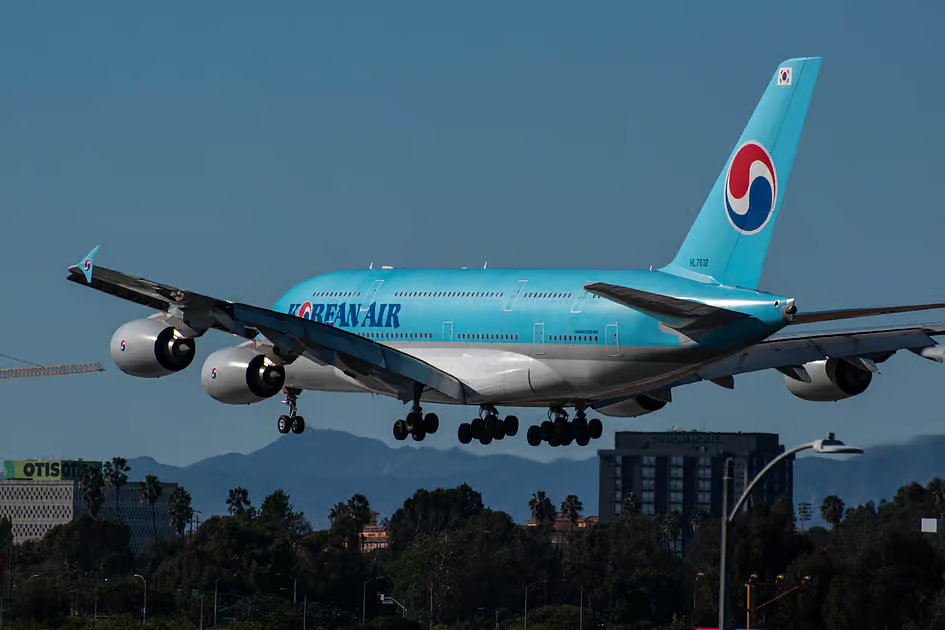
If you have ever looked out of an aircraft window and noticed the same city or coastline appearing again and again, you may have wondered why your plane is circling instead of landing. It does not necessarily mean something is wrong.
Aircraft sometimes enter a holding pattern, flying a designated route while waiting for permission to approach an airport. This can happen when runways are busy, bad weather affects arrivals or air traffic controllers need to manage congestion.
Now, the United Nations’ aviation agency, International Civil Aviation Organization (ICAO), wants countries to work more closely together to reduce unnecessary waiting in the sky. It is pushing for wider use of a system that could help airlines avoid delays before their aircraft even take off.
Stay up to date with the latest news. Follow KT on WhatsApp Channels.
Why do planes circle before landing?
Airports can only handle a certain number of arriving and departing aircraft at a time. When too many flights approach an airport, air traffic controllers may instruct some pilots to wait in the air until it is safe to continue.
Weather conditions, emergencies and airspace restrictions can also cause delays. A disruption at one airport can affect flights across several countries, particularly when aircraft are travelling through busy international routes.
Although holding patterns are a normal part of aviation, they use additional fuel and can delay passengers and connecting flights.
What is the UN proposing?
ICAO wants countries to coordinate air traffic more effectively through a system called air traffic flow management. Instead of allowing aircraft to depart and later wait above a crowded airport, authorities could identify congestion earlier and adjust departure times.
Airlines, airports, air traffic controllers and weather services would share information to help manage the number of aircraft moving through different regions.
ICAO Secretary General Juan Carlos Salazar compared the idea to coordinating traffic lights in a city. “If the traffic lights work independently, traffic becomes chaos and there are jams on every corner,” he told UN News.
The same problem can happen in aviation when neighbouring countries manage their airspace without sharing enough information.
How much time and fuel could be saved?
Early results suggest that better coordination can make a significant difference. According to ICAO, collaborative trials in the Americas saved more than 265,000 minutes of flying time in 2026, equivalent to around 4,400 hours.
The trials also saved more than $38.9 million and approximately 13,330 tonnes of fuel. That reduction in fuel use helped avoid an estimated 42,160 tonnes of carbon dioxide emissions.
Europe has also reported improvements. Between May and August 2026, a EuroControl programme designed to anticipate weather disruptions and congestion avoided around 3.1 million minutes of delay. The organisation estimated that the improvements saved approximately $448 million.
What would this mean for passengers?
For travellers, better coordination could mean fewer unexpected delays and more accurate information about flight disruptions.
If an airport is already experiencing congestion, airlines could be informed earlier rather than discovering the problem when aircraft are approaching their destination. This could also help airports recover more quickly after bad weather or other disruptions.
However, it does not mean flights will never be delayed or that aircraft will stop using holding patterns entirely. Controllers will still need to prioritise safety, and some situations cannot be predicted in advance.
Why has this not happened everywhere?
Some countries already use air traffic flow management systems, but international coordination remains a challenge. An aircraft travelling between continents may pass through several regions, each with its own procedures and technology.
Salazar said countries need to share information more effectively if they want to reduce disruption across international routes.
Following five days of discussions in Montreal, governments and aviation industry representatives backed efforts to introduce the system more widely. ICAO plans regional workshops in 2027, while new international rules on air traffic flow management are expected in November 2030.
Will flying become less stressful?
The need for better coordination is growing as more people travel. According to ICAO, airlines carried nearly five billion passengers on approximately 38 million flights in 2025.
The agency projects that annual passenger numbers could reach 12.4 billion by 2050.
Meanwhile, airspace closures, extreme weather and emerging technologies such as drones and air taxis are adding new challenges.
For passengers, the goal is straightforward: fewer unexpected disruptions, clearer information and less time spent waiting to reach their destination. And for those who have spent an extra half-hour circling above an airport, even a small improvement could make a difference.
Source: Khaleej Times