


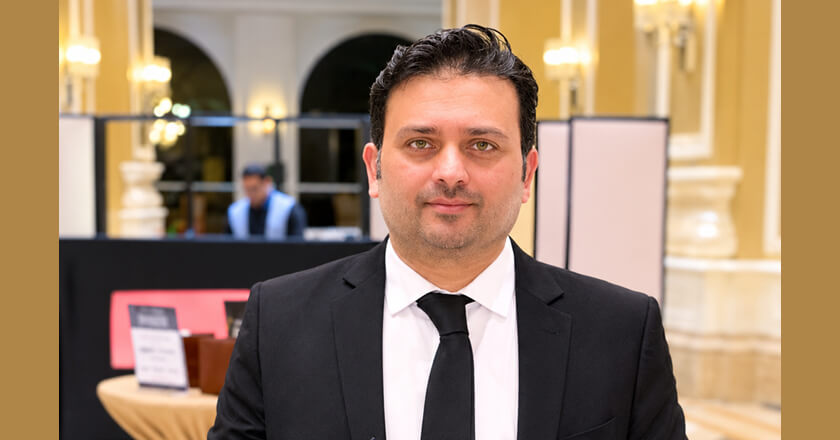
Tariq Nazir Khan, Chief Architect, Ministry of Foreign Affairs, UAE, addresses the careful use of AI in risk mitigation plans in this exclusive feature.
In recent times, headlines started revealing that the AI-native cybersecurity threats have left the entire world more exposed and vulnerable to unprecedented risks than ever. Numerous AI models have already carried out autonomous cybersecurity attacks recently. The rate at which the AI risk has increased is alarming indeed. Organisations need to be well-prepared for advanced AI risks and vulnerabilities ahead of time. Unregulated AI tools can boost the threats and vulnerabilities posed by malicious actors. With AI, threats can be more sophisticated and difficult to detect. Further, the use of unregulated and unapproved AI tools by employees can create risks and vulnerabilities for the organisations. These headlines give the feeling that the end of the world is nigh.
Furthermore, headlines from the security risk solutions company ‘Resilience’ claims human error drove majority of cyber losses in the first six months of year 2026. More than 85 percent of incurred losses stemmed from attacks exploiting human error that is including phishing, transfer fraud and even social engineering. It reveals urgent need for institutions to solve foundational cyber vulnerabilities before AI amplifies them. It can be challenging to read these headlines and not feel like the sky is falling.
While organisations are attempting to keep up with AI to strengthen security, it is equally important to keep in mind that focusing too much on AI will lead to neglect the real risk domains that lead to business disruption. By all means, AI threats are always here and we must incorporate AI-driven risks in our risk mitigation plan. However, focusing solely on AI and not what AI will become a force multiplier of, will not help us decrease the loss and disruption that is already here. Careful use of Al eliminates the friction that has always required review and validation, even informal ones. The process needs to be reinforced in the absence of such friction.
According to the data from Mandiant’s 2026 Frontline Threat Report indicates time-to-exploit is negative 7 days, on an average. This means that threat actors are exploiting vulnerabilities before even patches are released. With so much unknown with AI, it is challenging to understand how AI is moving the needle on cyber security risk. Strengthening cybersecurity fundamental controls is the best way to prepare for AI risk, regardless of the shape it takes next.
In addition, industry reports like these illustrate the seriousness organisations should have in implementing the advance parameters of cybersecurity. As more complex cyber threats evolve and emerge, outliers like AI may represent the biggest risk to organisations. The advance controls that mitigate should be implemented and the risks that directly affect the bottom line should be addressed. Strengthening the cybersecurity core controls is the best way to prepare for AI risk, regardless of the shape it takes next.
Moreover, Al technologies can also be integrated into the process of cybersecurity in an effective way without bringing about any of these issues, but it will take some discipline. When an organisation embraces Al, it should recognise the technology as part of the control environment rather than an addition to it. Where Al is affecting decisions made in the organisation, it should be managed as well. It means determine ownership of validation, ensure the processes for each output can be tracked back and reviewed, and guidelines as to its use. None of this will slow down the adoption of Al. This will only mean whatever the technology generates will be credible.
Last but not least, Al may be transforming how work is being done in cybersecurity to address risks, but it is not transforming what organisations are supposed to do. Therefore, where Al has played a vital role in decision making, it has to be managed just like any other initiative in the control environment, not as a measure of caution, but as a mandatory requirement. Organisations need to be prepared to shift their defence against rapidly changing Agentic AI attack vectors. The best way to accomplish this is to address the risks that directly impact the bottom line. The threat landscape may change, but, if necessary, security controls are properly instituted, threats to the organisation may be reduced. Implementing fundamentals may seem costly, but it would more than pay for itself in reduced threats.
Image Credit: Ministry of Foreign Affairs, UAE
Source: Tahawul Tech