


New report highlights the country’s leadership in regulated stablecoins and fintech innovation
Dubai: The UAE is emerging as a regional leader in the development of regulated stablecoins, creating a new model for digital money that combines global dollar-backed stablecoins with sovereign-aligned local currency alternatives, according to a report by global management consultancy Arthur D. Little.
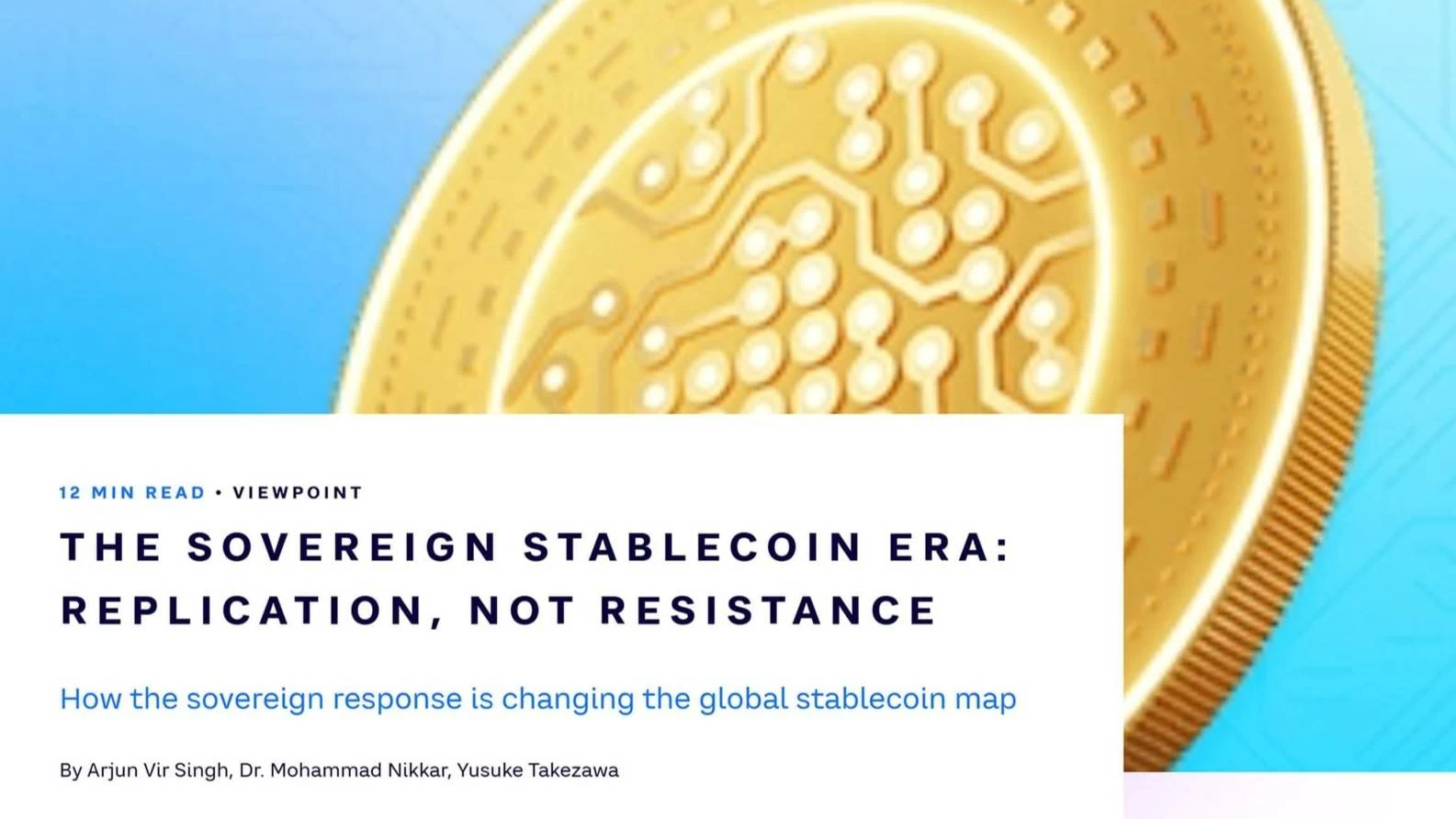
In its latest report, “The Sovereign Stablecoin Era: Replication, Not Resistance,” the consultancy said governments are increasingly moving away from choosing between accepting dollar stablecoins or restricting them, instead pursuing a third approach that combines regulated international stablecoins with domestic digital currency infrastructure.
The report identifies the UAE as the leading example of this model in the Middle East.
Following the introduction of the region’s first comprehensive regulatory framework for fiat-referenced tokens in 2024, the UAE has seen the growth of regulated dollar-backed stablecoins alongside a developing dirham-denominated digital currency ecosystem.
Among the initiatives highlighted is DDSC, a dirham-backed stablecoin supported by International Holding Company (IHC), Sirius International Holding and First Abu Dhabi Bank (FAB).
Two-layer strategy
According to Arthur D. Little, the UAE’s approach reflects a deliberate two-tier system in which dollar stablecoins support international and cross-border transactions, while dirham-denominated stablecoins are designed to facilitate domestic and potentially regional payments.
Arjun Vir Singh, Partner and Global Head of Fintech, Payments and Digital Assets at Arthur D. Little and co-author of the report, said the UAE is demonstrating that global and local digital currencies can coexist within the same financial ecosystem.
“The UAE is demonstrating that dollar stablecoins and a domestic digital currency ecosystem do not have to be competing choices,” he said.
“Global instruments can continue to serve international flows, while a regulated dirham layer can support domestic and regional activity.”
He added that the UAE is positioning itself not only as an adopter of digital finance but also as a market helping define how regulated digital money operates within modern financial systems.
Opportunities for banks and payment providers
The report also highlighted opportunities for financial institutions and payment service providers as the stablecoin market evolves.
Dr Mohammad Nikkar, Principal in the Financial Services Practice at Arthur D. Little Middle East and co-author of the report, said the discussion has shifted beyond whether institutions should participate in stablecoins and towards determining which payment networks, currencies and customer segments they wish to serve.
“For banks and payment players, the question is no longer simply whether to participate in stablecoins,” he said.
“It is which currency, which payment layer, which client and which corridor they want to serve.”
Nikkar noted that significant opportunities remain at the regional level, particularly across major trade corridors linking the GCC with international markets.
The report concludes that the UAE’s regulatory approach could serve as a model for other countries seeking to integrate digital assets into their financial systems while maintaining local monetary and regulatory oversight.
Source: Emirates 24|7