


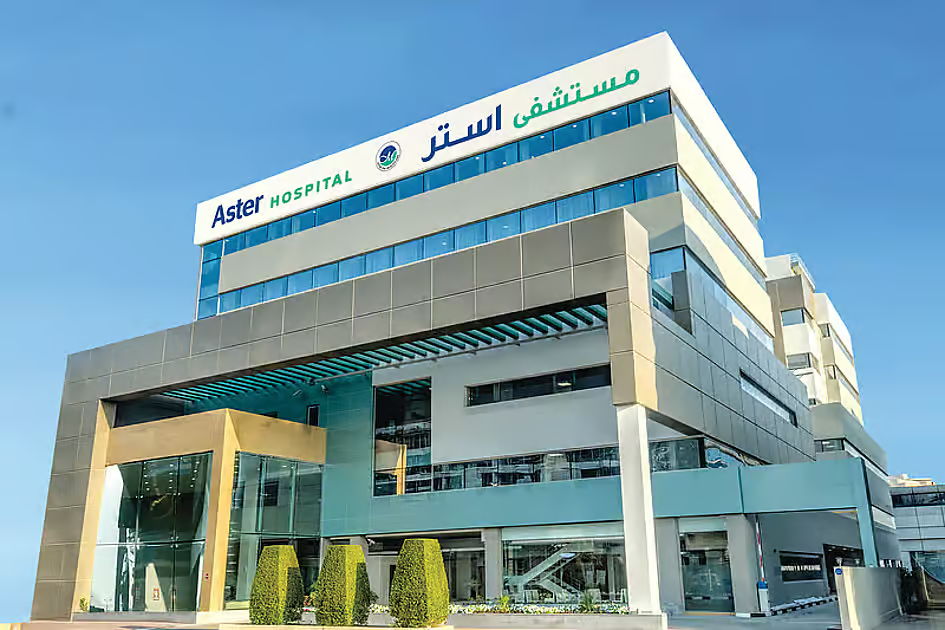
Aster DM Healthcare, which employs about 18,500 people in the region, expects to add 1,000 to 2,000 staff a year through new hospitals alone, with another 300 to 500 hires for its clinics and pharmacies.
Alisha Moopen, managing director and group CEO, said the group expects to remain one of the region’s largest employers of skilled healthcare workers.
Each new hospital typically creates 1,000 to 1,500 jobs, mostly for doctors and nurses. Aster usually adds one or two hospitals a year, she said.
The healthcare group also adds five to 10 clinics and 30 to 40 pharmacies annually.
“We continue to automate whatever we need to, but healthcare is still very high-touch and requires that human intervention,” she told Khaleej Times. She said the group expects the hiring trend to continue as it increases its market share in all the countries where it operates.
New hospital
The latest addition is Medcare Royal Hills Hospital, a Dh350 million project that Aster has contracted engineering firm Menasco to build. The 144-bed, multi-specialty tertiary-care hospital is expected to begin operations by 2029. It will be Medcare’s seventh hospital and Aster’s 12th in the UAE.
Moopen said radiation therapy has been the missing piece in Medcare’s offering.
“The RT services we don’t have within Medcare anywhere in the group right now,” she said. “Sadly, the incidence of oncology is rising significantly, so for us to be able to complete the full circle of care, it was very important to have a flagship that is fully comprehensive.”
The building is valued at Dh350 million, but the total investment, including medical equipment, comes closer to Dh500 million, she added.
Dh1 billion expansion plan
The hospital forms part of Aster’s commitment to invest more than Dh1 billion in the UAE over the next five years. Moopen said Royal Hills Hospital and the 150-bed expansion of Aster Qusais Hospital together account for 60 to 65 per cent of that sum, adding almost 300 beds.
She said the budget is not fixed.
“That Dh1 billion that I mentioned in the beginning of the year, it’s not a static amount,” she said, adding that investment decisions respond to business conditions. Aster’s market share has risen this year “despite all the political unrest”, she explained.
Aster has taken an opportunistic approach to growth, Moopen said. Last month, it added 110 beds through the acquisition of IMH Hospital. She noted that acquisitions in the UAE are more challenging because the market is relatively young and few assets are available. As a result, the group combines greenfield projects with selective acquisitions.
Outside the UAE, Aster acquired a 100-bed facility in Dammam, Saudi Arabia, a few months ago and plans to double its capacity to 200 beds. The UAE remains its core market, she said.
IPO: ‘We are watching the market closely’
According to Aster’s group CEO, the expansion will be financed through a mix of equity and long-term debt.
On a possible listing, Moopen said Aster remains open to an initial public offering (IPO) but has made no decision on its timing.
“We are watching the market closely. We are preparing ourselves for the IPO,” she said, adding that the decision depends on macroeconomic conditions and internal readiness. She said she could not offer any guidance on the timing yet.
Technology: Humans and robots working together
Aster continues to invest in AI and robotics, mostly for surgery, Moopen said, but neither is expected to directly affect headcount.
She said AI will make healthcare more personalised and connected, rather than something people turn to only “when something’s broken” — a problem the group’s chairman describes as disconnected healthcare.
Asked whether robots could one day operate independently, Moopen said Aster expects care to be delivered by humans working alongside machines.
“We’re still far away from a point where robots are leading care,” she said, adding that patients and their families need a “human in the loop” for decisions that go beyond technical considerations.
Source: Khaleej Times