


The UAE is placing Africa at the forefront of its international economic strategy, ramping up bilateral trade, investment and commercial partnerships as the continent emerges as a powerful engine of global growth. With Africa projected to expand by 4.2% this year, the region continues to weather global economic storms and remains among the world’s fastest-growing markets despite rising geopolitical tensions, trade frictions and economic fragmentation, officials say.
Top government officials, business leaders and analysts note that the UAE has been steadily widening its economic footprint across Africa, spanning infrastructure, logistics, ports, energy, renewable energy, technology and financial services. The push reflects a broader strategic shift to diversify international partnerships, deepen economic cooperation and build direct bridges with emerging economies at a time when traditional trade routes and alliances are being redrawn.
In a world where economic power is increasingly shifting southward, the UAE is seeking to stay ahead of the curve by strengthening its engagement with Africa, a continent widely viewed as one of the last major frontiers of growth and opportunity. The strategy is designed not only to unlock new markets but also to create mutually beneficial partnerships that can stand the test of time.
Anwar Mohammed Gargash, Diplomatic Adviser to the UAE President, recently revealed that annual trade between the UAE and African countries has surpassed $107 billion, while Emirati investments across the continent are approaching $150 billion. The figures underscore Africa’s growing importance in the UAE’s long-term vision to broaden trade and investment links beyond traditional markets and cultivate stronger economic relationships with high-growth emerging economies.
“The UAE’s investment, development and humanitarian engagement with Africa represents a distinctive success story,” Gargash said, highlighting the country’s early recognition that the changing global landscape required a more direct and forward-looking approach to partnerships.
According to Gargash, the UAE understood early on that the rules of global engagement were evolving and that building meaningful relationships with Africa could no longer be viewed through traditional Western or European gateways.
“The UAE realised early that the world was changing, and that engagement with Africa and building partnerships with it should not pass through the European and Western gateway,” Gargash said in a post on X.
The UAE is accelerating its economic engagement with Africa through a combination of trade, investment and Comprehensive Economic Partnership Agreements (CEPAs), according to experts. The emirates has emerged as one of Africa’s most significant commercial partners, leveraging its strategic location, world-class logistics infrastructure and investor-friendly environment to serve as a gateway for African businesses to regional and global markets.
Investment activity is also gathering pace. UAE entities have become major investors in African ports, logistics, aviation, renewable energy, digital infrastructure and food security projects. These investments align closely with Africa’s long-term development priorities, including industrialisation, connectivity and sustainable growth.
CEPA’s Major Role
Sheikh Shakhboot Nahyan Al Nahyan, Minister of State for Foreign Affairs, echoed similar view in his recent article and observed that deeper connections between Africa and the UAE can create opportunities such as linking markets, building regional industries, expanding infrastructure, lowering trade barriers and enabling businesses to compete globally.
“Together, the UAE and its African partners can turn shared ambition into lasting growth and prosperity,” according to the minister.
Sheikh Shakhboot highlighted that Africa is playing an increasingly important role in the UAE’s own economic diversification journey.
“With nine CEPAs signed with African countries, alongside growing trade and investment flows, cooperation is expanding across infrastructure, energy, logistics, innovation, services and market access,” the minister said.
The UAE is currently working to conclude CEPAs with several African countries, having reached advanced negotiation stages with Rwanda, and has also received requests from other nations, including Ghana, to join the CEPA programme in the coming years.
The emirates had concluded nine CEPAs with African countries, including Nigeria, the Democratic Republic of Congo, Sierra Leone, Gabon, Angola, Kenya, Congo-Brazzaville, Mauritius, and the Central African Republic. These agreements cover tariffs, services, digital trade, and investment protection and are designed to complement the African Continental Free Trade Area by strengthening value chains and facilitating cross-border competitiveness.
The UAE’s CEPA programme is playing a pivotal role in strengthening economic cooperation by reducing trade barriers, facilitating market access and promoting investment flows across key sectors. As African economies continue to diversify beyond commodities into manufacturing, technology, renewable energy, agriculture and services, UAE businesses are increasingly exploring opportunities across the continent. Conversely, African companies are using the UAE as a hub to expand their international footprint.
With the African Continental Free Trade Area (AfCFTA) creating a unified market of more than 1.4 billion people and the UAE expanding its network of CEPAs, the foundations are being laid for a new phase of economic partnership. As Africa sustains its growth momentum and the UAE deepens its commercial engagement, bilateral trade and investment are expected to reach new heights, reinforcing a mutually beneficial relationship that supports economic diversification, job creation and long-term prosperity on both sides.
UAE — A Strategic Partner
In June, Minister of Foreign Trade Dr Thani bin Ahmed Al Zeyoudi said the UAE continues to deepen its economic partnerships with nations right across Africa, built on trade, investment and mutual development.
“As trade and investment flows between the UAE and African markets continue to expand, the focus is on creating long-term economic value, strengthening connectivity and supporting projects that contribute to sustainable development and shared prosperity,” Dr Thani said.
Lester Bouah, Chief Director for Investment Mobilisation at South Africa’s Department of Trade, Industry and Competition, said the UAE is a pivotal strategic partner for Africa.
On the sidelines of the Dubai-South Africa Business Forum held in Johannesburg in June, Bouah said South Africa views the UAE as a key partner in promoting trade, investment and economic cooperation, not only at the bilateral level, but also as a global gateway linking Africa with international markets. “The UAE is among the leading international investors in South Africa, with Emirati investors launching 33 investment projects in the country valued at approximately $22.96 billion, creating more than 5,500 jobs. This reflects the confidence the Emirati business community places in the South African market,” Bouah said.
Africa’s Growth Trejectory
Referring to the African Development Bank’s 2026 African Economic Outlook (AEO) report, experts said the continent’s growth trajectory continues to be supported by structural reforms, infrastructure development, rising commodity exports and growing domestic consumption.
Africa’s real GDP growth is projected to hold firm at around 4.2% in 2026, remaining among the fastest-growing regions globally despite global economic fragmentation and trade tensions, according to the AEO 2026 report.
In 2025, African economies expanded amid heightened trade tensions, with average real GDP growth strengthening to 4.4%, nearly one %age point higher than the previous year. This placed Africa among the world’s fastest- growing regions.
“The continent has continued to demonstrate resilience and determination despite recurrent global and regional shocks. Yet this resilience is increasingly tested by a fragmented global environment, marked by supply chain disruptions, tighter financial conditions, and elevated uncertainty. Despite improved growth, deep structural constraints persist,” according to Dr Sidi Ould Tah, President, African Development Bank Group.
Economist Intelligence (EIU), in its Africa Outlook 2026 report, also mentioned that Africa will be the world’s fastest-growing region in 2026.
“Major economies will prove resilient and distinct hotspots of growth are expected in East and West Africa. In the short term key drivers of growth will be declining inflation, digital transformation and adoption strategies, sustained inward foreign direct investment (FDI), expanding regional markets and global value-chain integration. Africa has various international and regional trade deals in the pipeline that will continue to evolve in 2026, bringing a range of challenges and opportunities for participating states,” according to EIU Africa Outlook report.
Unlocking $1.43t financing
The AEO report noticed that transformation is too slow, vulnerability to shocks remains high, and development needs are outpacing available financing. The result is, inequality remains stubborn. Achieving sustained and inclusive growth will require a substantial increase in investment.
Africa must raise annual growth to 7% or higher, sustained over decades, to enable large-scale job creation and accelerated poverty reduction. This demands a sharp increase in capital stock growth from about 3.3% today to roughly 8.7% annually by 2030, according to the report.
By addressing inefficiencies in resource mobilisation and utilisation, Africa could unlock up to $1.43 trillion in additional annual financing — more than its estimated annual development financing gap of $1.3 trillion.
Domestic resource mobilisation is central to this effort. Nearly $469 billion remains untapped due to weaknesses in tax compliance, administration, and policy design.
Equally important is improving the efficiency of public spending. More than 40% of public investment is currently lost to inefficiencies, and closing this gap could generate up to $299 billion each year for growth-enhancing investments.
“Ultimately, Africa’s challenge is not only to close financing gaps, but also to transform financing systems to mobilise capital at scale, deploying it efficiently, and strengthening financial agency. That’s the path to enhanced resilience and accelerated inclusive growth” said Dr Sidi Ould Tah, President, African Development Bank Group.
Food Security, Renewable Energy
Analysts are of the opinion that investment in Africa’s agricultural land, food production facilities and related export operations will remain a crucial pillar of GCC’s long-term development plans to ensure food security of the region.
Latest data indicates that the GCC has invested over $100 billion in Africa over the past decade, or about 30% of its total outward foreign direct investment (FDI). The UAE, Saudi Arabia and Qatar have already made significant investment in Africa and plan to increasing their exposure to the region.
Angola, Egypt, Ethiopia, Liberia, Sudan, Tanzania, Zambia, Zimbabwe and other countries have agreed or are negotiating long-term land lease deals with GCC states. More deals are said to be in the pipeline, despite local concerns over the potential impact on communities that are reliant on farming for most of their income.
In addition to investment in agriculture and maritime sectors, energy transition is also high on the agenda for GCC states. The FDI announcements point to Gulf states committing substantial project finance to Africa’s renewable energy industry, including solar and green hydrogen projects.
“The UAE and Saudi Arabia are among the largest investors in African renewables and plan to roll out various projects that will expand their footprint across the sector through to 2030. GCC states have an eye on Africa’s vast green hydrogen potential,” according to an analyst.
The information and communications technology sector in Africa is another key area of investment focus for the UAE-based companies and institutions. The EIU report suggests that building ICT capacity and market potential in Africa sits well with GCC diversification agendas.
“The GCC states have an eye on Africa’s fast-growing national markets and vibrant regional economic communities and are positioning themselves to benefit from future market potential created by pan-African initiatives,” experts said.
KEY PROJECT IN AFRICA
Below are some of the UAE projects in Africa focusing on infrastructure, energy, trade, logistics, food security and industrial capacity.
-
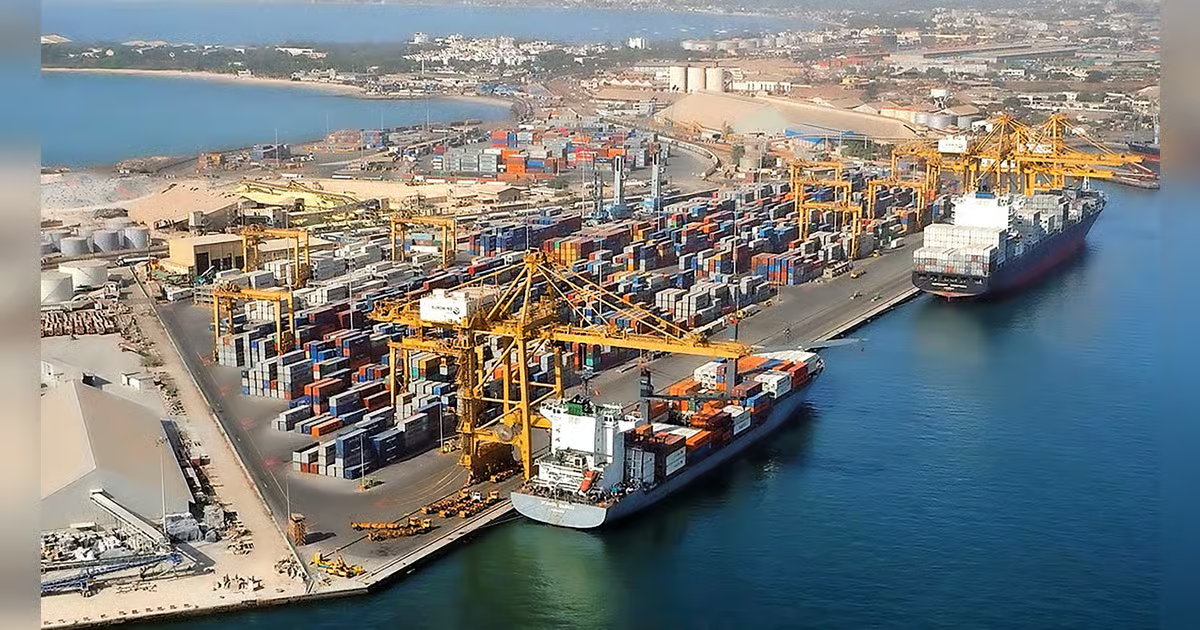
In Senegal, DP World has invested in port capacity and trade infrastructure, including the Port of Ndayane and the Dakar Container Terminal.
-
In Togo, AMEA Power developed the Sheikh Mohamed Bin Zayed Solar Plant, supporting renewable electricity access.
-
In the Central African Republic, Global South Utilities developed the Sakaï Solar project, a 50MW facility with battery storage that expands electricity generation capacity and improves access to reliable, clean power.
-
In the Union of the Comoros, UAE-financed solar plants across the country’s three main islands combine approximately 20MW of solar capacity with battery storage and transmission infrastructure, strengthening energy security and supporting more reliable electricity access.
-
In Kenya, DP World and GulfCap Africa are developing the 222-hectare Mombasa Industrial Park, a special economic zone intended to attract investment, expand local manufacturing and strengthen connections to regional and international markets.
-
In Angola and the Republic of the Congo, AD Ports Group is investing in ports and logistics infrastructure that expands trade capacity and connects African economies to global markets.
-
In Zambia, International Resources Holding’s investment in Mopani Copper Mines is aimed at supporting the revival of production, employment stability and local value creation, while maintaining a significant Zambian ownership stake.
Source: Khaleej Times