


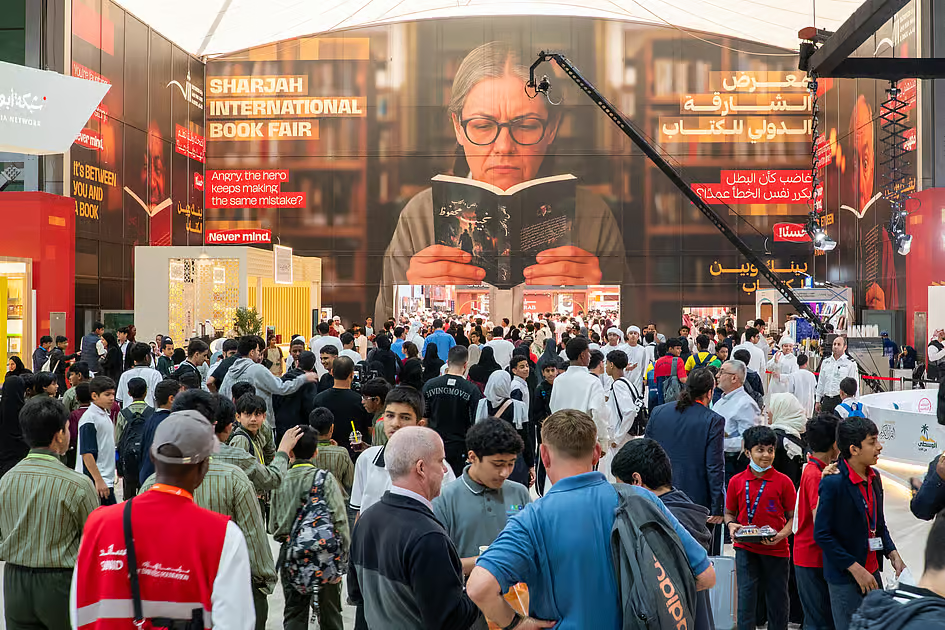
American novelist Karen Dionne would rather readers miss out on her books altogether than have them translated using AI (artificial intelligence). With her work translated and published in 28 languages, Dionne believes literary translation demands far more than simply converting words from one language to another.
“I would rather people not read my work at all than read an AI-generated translation,” Dionne told Khaleej Times. “I cringe at the idea of my work being translated using AI. Just the fact that there are awards given for excellence in translation proves that translation is an art, and not a science.”
As AI tools make it easier to translate books quickly and reach readers across different languages, authors are questioning whether the technology can preserve the emotions, cultural meanings and writing styles that make literature unique.
Stay up to date with the latest news. Follow KT on WhatsApp Channels.
More than just words
For Filipino poet and filmmaker Kristian Sendon Cordero, AI offers opportunities to make literature more accessible, but he believes the human element should remain central to the process.
“Translation, to me, is an art in itself. It requires more than the transfer of words from one language to another; it requires an understanding of the world from which those words emerge,” Cordero told Khaleej Times.
Dionne, for her part, believes that even a single word can influence how readers experience a story.
“Authors spend many hours choosing exactly the right words to infuse their work with beauty and emotion,” she said. “The rhythm and cadence of our sentences matter.”
Dionne recalled how the German translator of her novel The Marsh King’s Daughter once contacted her to request the scientific names of plants and animals mentioned in the book to ensure they were translated accurately. “I can’t imagine an AI bot exhibiting that level of care and attention,” she noted.
Can AI help literature reach more readers?
For Cordero, creative director of Savage Mind Bookshop in the Philippines, the challenge goes beyond choosing the right words. He believes literature carries cultural experiences and memories that cannot always be understood through language patterns alone.
“A word in Bikol may carry the weight of a landscape, a devotional tradition, or an entire history of relationships that cannot simply be retrieved from its dictionary equivalent,” he explained.
He acknowledged that AI could become increasingly sophisticated in recognising literary styles and reproducing their effects, but questioned whether that would be enough. “Recognising a pattern is not necessarily the same as inhabiting the experience that produced it. And this distinction matters to me as a writer,” he added.
Despite his concerns, Cordero believes AI could create opportunities for books written in smaller languages to reach international audiences.
“AI can certainly widen the circulation of literature and allow readers to encounter works that would otherwise remain inaccessible because of linguistic barriers,” he said.
Cordero warned, however, that making literature available in more languages should not come at the expense of its cultural identity. “A language is not simply a collection of words; it carries histories, memories, gestures, humor, beliefs, and ways of inhabiting the world,” he added.
Dionne acknowledged that AI could make a book available in a language where no human translator is available. However, she believes accessibility should not be the main priority when translating literature.
For both authors, reaching a wider audience means little if the original work loses the qualities that give it meaning.
What about authors’ rights?
The use of AI in literary translation also raises questions about who controls translated works and whether authors should be compensated.
Dionne explained that writers are rarely directly involved in translating their books. When translation rights are sold, the publisher acquiring those rights is responsible for maintaining quality. However, she strongly opposed the idea of her work being translated without compensation.
“If by ‘without my direct involvement’ you mean without being compensated, absolutely not. That’s piracy,” she said.
Cordero also expressed concerns about AI translations being produced and circulated without an author’s knowledge or consent. “I would be uncomfortable with my books being translated and circulated through AI without my knowledge, consent, or some form of editorial accountability,” he said.
While he welcomed the possibility of reaching more readers, he believes technology should support human creativity rather than replace the judgment and imagination involved in literary work.
The human touch
Both authors ultimately favour human translators, although their views on the wider possibilities of AI differ.
Dionne believes good translators approach their work with the same artistic care as writers. “Good translators are artists who care about breathing life into their translation and doing their best to convey the author’s original intent,” she said.
Cordero, meanwhile, believes translators must understand not only what authors write, but also the meanings they leave unspoken. He noted: “A translator must not only understand what a writer says, but also develop a certain intimacy with what the writer has left unsaid.”
For him, that human connection remains essential, regardless of how advanced translation technology becomes. “I still need to see a human face behind every artistic production,” he underscored.
Source: Khaleej Times