


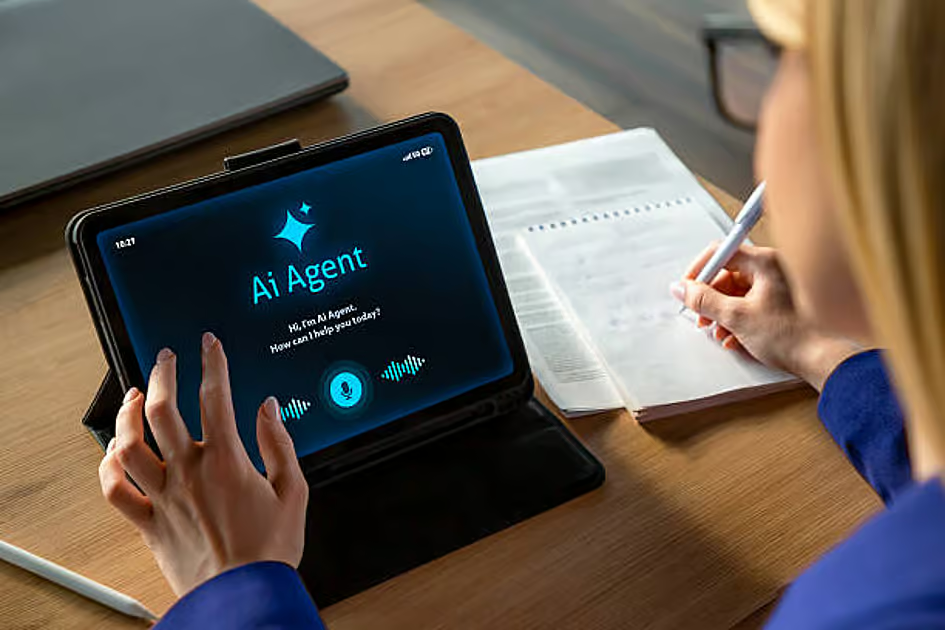
Artificial intelligence (AI) is giving employees new ways to work faster, but for many professionals in the UAE, the time saved is not necessarily translating into lighter workloads.
While 76 per cent of employees in the UAE say they are excited about how AI will change their work — compared with 65 per cent globally and 72 per cent report having more opportunities to innovate than a year ago — the pressure to deliver more continues to grow.
According to the Korn Ferry UAE Workforce Report 2026, which draws on the views of 500 professionals in the country, 70 per cent of employees say their workload has grown significantly over the past two years.
Stay up to date with the latest news. Follow KT on WhatsApp Channels.
The findings highlight a growing workplace dilemma. As AI automates repetitive tasks and creates opportunities for innovation, are employees benefiting from the efficiency gains, or simply being expected to do more?
Nageeba Suleman Aboobacker, senior manager, People and Culture at Hotpack, said organisations must ensure that the introduction of AI does not automatically translate into additional responsibilities for employees.
“AI can make work easier by handling repetitive, time-consuming tasks, allowing employees to focus on meaningful work, problem-solving and better decisions. However, time saved should not automatically mean additional responsibilities. Organisations must balance efficiency with employee wellbeing.”
She said human resources teams need to work closely with business leaders to review workloads, establish realistic expectations and assess the quality of work rather than focusing solely on output.
Managers, too, need training to allocate tasks appropriately and evaluate performance fairly as AI changes job responsibilities. Employees must also understand how to use the technology responsibly, particularly when handling confidential data and sensitive information.
“Regular feedback helps HR identify whether technology is reducing pressure or adding to it. Ultimately, AI should improve how people work, not simply how much they work,” Aboobacker said.
Are employees being asked to do more?
Aws Ismail, co-founder of Onyx AI Solutions, believes the problem often lies not in the technology itself but in how companies manage the time it saves.
“Honestly, a lot of companies are just filling the time with more work. That’s a management problem, not an AI problem. If you save someone two hours and then hand them two hours of new tasks, nothing has improved.”
He said organisations should instead use AI to remove tedious, repetitive responsibilities and allow employees to concentrate on work that requires human interaction and judgement.
At Onyx, for instance, he explains that company’s AI recruiter handles initial screening calls, allowing recruiters to spend more time engaging with stakeholders and candidates.
“That’s how it should work, it should be about improving productivity as well as efficiency and output of results,” Ismail said.
He also believes the way companies measure performance needs to change. When employees are assessed primarily on the volume of work completed, AI can simply increase the number of tasks they are expected to finish.
“Measure the value they add instead, and I believe that HR has to lead this. Ask your teams what part of their job wears them down, and give that to AI first.”
Ismail said businesses should decide how the time saved will be used, whether to improve the quality of work, develop new skills or establish a more sustainable pace.
“AI is a huge opportunity to make work better. But only if companies let their people feel the benefit, and really enjoy using it, not just the bottom line.”
UAE companies rethink workloads and employee wellbeing
Shabeel Ummer, head of HR at V Group International, highlights that AI has helped employees reclaim time rather than adding to their workload.
“AI has made our work easier and has given them back real time. But that only happens when you are clear about one principle: we must use AI, and not allow AI to use us.”
Across the company’s retail, wholesale, e-commerce and support divisions, employees use AI for drafting, analysis and report preparation. Tasks such as handling first-level customer queries, which previously took hours, can now be completed in minutes.
Ummer said the time saved allows employees to focus on customers, teamwork and business problems that require human judgement. AI also helps managers distribute project responsibilities more fairly according to employees’ capacity.
He believes organisations need to reconsider what a productive working day looks like as AI becomes more integrated into everyday operations.
“Companies must rethink daily expectations, but the measure should be the quality of work, not the quantity. A good day is judged by the value created, not the number of tasks completed.”
For HR teams, the challenge is to ensure that efficiency gains translate into meaningful benefits for employees rather than a fresh set of targets.
“AI should give our people better results, not longer to-do lists. HR’s role is to set that boundary, so that time saved by AI goes into better work, learning and customer care, not simply more targets.”
Source: Khaleej Times