


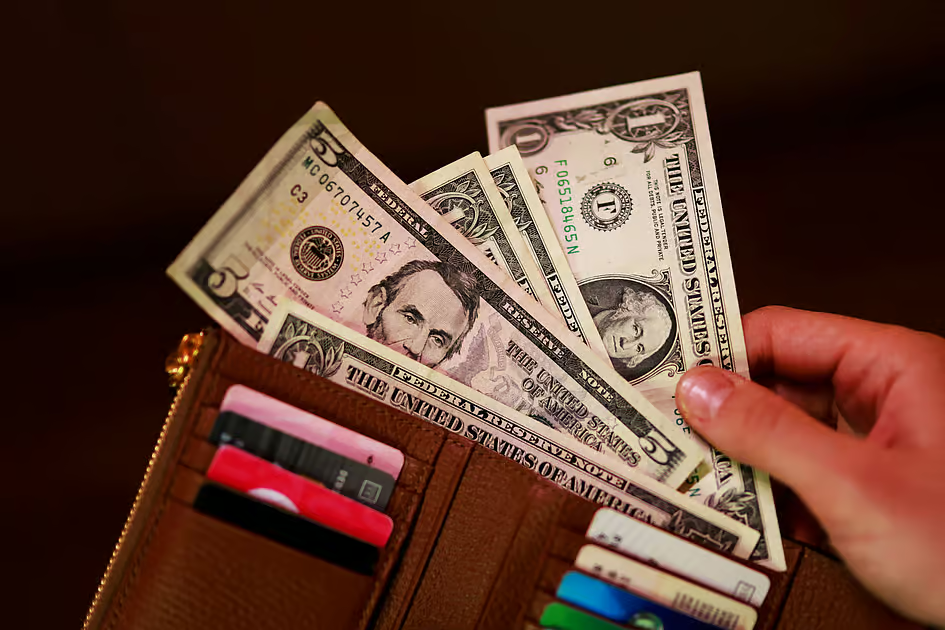
The dollar on Tuesday scaled a fresh 19-month peak against a basket of peers amid bets for more aggressive policy tightening by the US Federal Reserve following hot inflation data and hawkish central bank rhetoric.
The US currency extended a 10-month high versus its Australian counterpart as a global selloff in AI stocks weighed on market sentiment, hurting the risk-sensitive Aussie.
A sharper-than-expected acceleration in US consumer
inflation last week triggered a run of five straight days of
gains for the US dollar index, which carried into a sixth
day on Tuesday with it rising to 103.66, the highest since April
2, 2025, when President Donald Trump rolled out his tariffs. The
index measures the dollar against six rivals, including the
euro, sterling and the Japanese yen.
Traders now view a Fed interest-rate hike at the next
meeting in December as a certainty, and they also lay around 4%
odds on a supersized half-point increase, according to the CME
Group’s FedWatch tool. A day earlier, those bets on an oversized
hike were at nearly 12%. A week earlier, there were 16% odds for
no change to policy.
Meanwhile, the tech selloff continued in Asia on Tuesday,
with Japan’s Nikkei and South Korea’s KOSPI both
firmly lower. A key test for AI sentiment – which has been
rocked by the sudden departure of Nvidia’s CEO, a Democratic
sweep in US midterm elections and worries about a debt-fuelled
AI infrastructure expansion – comes with the release of Nvidia
earnings later in the day.
The dollar has been supported by the AI boom as capital
flowed into US markets.
“Continued AI-related capital inflows and expectations of
faster Fed tightening should support the USD,” said CBA
economist and currency strategist Carol Kong.
“However, erratic US policymaking and a sharp correction in
AI-related equities pose key downside risks to our bullish USD
outlook.”
In terms of the Fed outlook, US retail sales data later in
the day could offer further clues.
The dollar edged to a fresh 18-month high of 0.84075 Swiss
franc and rose slightly to 159.49 yen.
Japan’s currency has been hemmed in around 160 per dollar,
which traders view as a potential trigger level for another
round of intervention to support it.
The euro slipped to a new 19-month low of $1.0985.
Sterling fell to $1.3172.
The Aussie dipped to $0.6725, the lowest since
January.
Source: Khaleej Times