


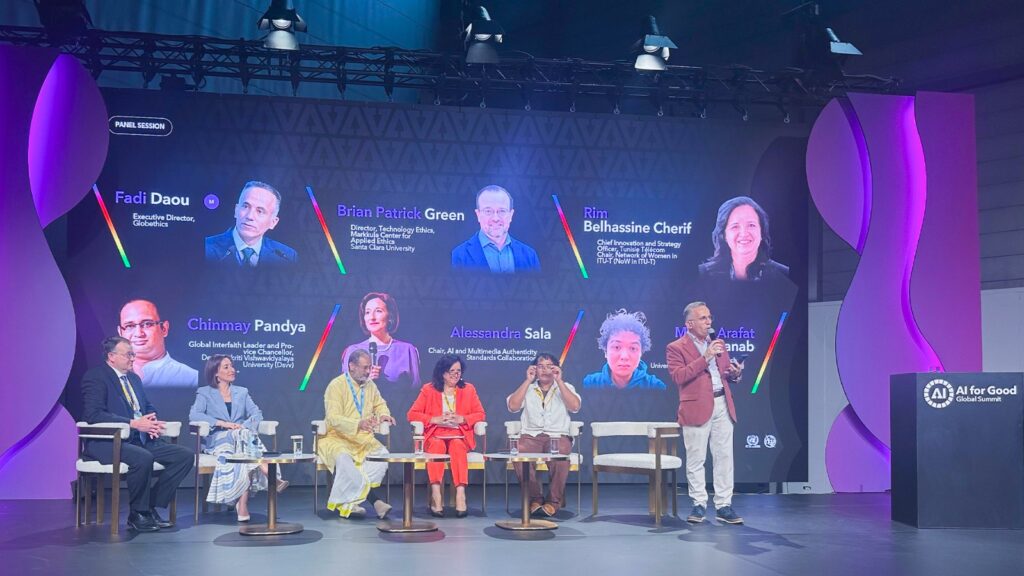
GENEVA, 10th July, 2026 (WAM) — The Muslim Council of Elders, in partnership with Globethics, organised a high-level panel on the ethical governance of artificial intelligence (AI) during the ITU AI for Good Global Summit 2026 in Geneva, calling for stronger cooperation to ensure AI serves humanity and the common good.
Th session, titled “AI as a Global Common Good: What Do Religious and Industry Leaders Think?”, was the first of its kind at the summit, bringing together religious leaders, technology experts, ethicists and industry representatives to discuss the ethical and humanitarian implications of AI.
Moderated by Dr. Fadi Daou, Executive Director of Globethics, the discussion focused on safeguarding human dignity, strengthening accountability, building trust and promoting cooperation among religious institutions, technology companies, policymakers and international organisations to support human-centred AI governance.
Alessandra Sala, Chair of the AI and Multimedia Authenticity Standards Collaboration, said that organisations are more likely to embrace ethical AI when they recognise that responsible practices generate value, trust, and long-term benefits for both businesses and society.
Dr. Brian Patrick Green, Director of Technology Ethics at the Markkula Center for Applied Ethics at Santa Clara University and representative of the Vatican, emphaised that the future of AI depends on a deeper understanding of what it means to be human.
He argued that no single discipline, institution, or tradition holds a monopoly on truth and that effective AI governance requires drawing upon diverse sources of knowledge and wisdom.
Dr. Chinmay Pandya, Global Interfaith Leader and Pro-Vice Chancellor of Dev Sanskriti Vishwavidyalaya (DSVV), said that while technology can reveal what humanity is capable of doing, faith and spirituality help determine what humanity ought to do. He further emphasized that decisions relating to human dignity, freedom, and moral responsibility should not be delegated entirely to machines and called for collective stewardship of AI informed by both technological expertise and ethical wisdom.
Rim Belhassine Cherif, Chair of the Network of Women in ITU-T and Chief Innovation and Strategy Officer at Tunisie Télécom, stressed that AI should serve people and improve their lives.
Participants emphasised that religions are essential partners in shaping the ethical frameworks that govern artificial intelligence, given the values-based and humanitarian principles they offer in safeguarding human dignity, promoting ethical responsibility, and reinforcing shared human values.
They further called for greater involvement of women and youth in the global dialogue on artificial intelligence, recognizing them as key partners in shaping the future of technology.
The session concluded with a call for stronger collaboration among governments, international organisations, the private sector, academia, civil society and religious leaders to ensure AI development remains centred on humanity and contributes to sustainable development.
Source: Emirates News Agency